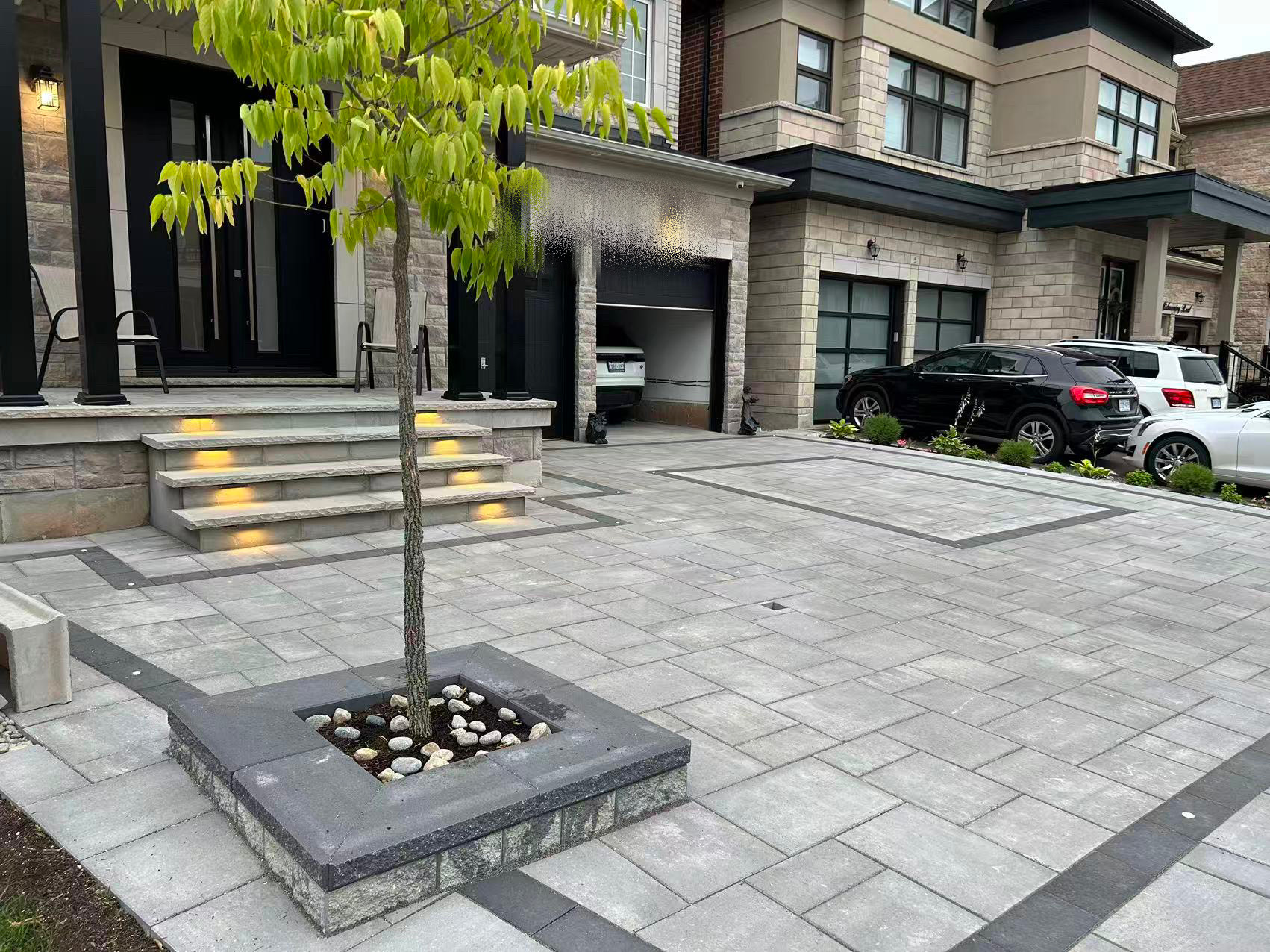
Finding a reliable outdoor contractor in the GTA is genuinely harder than it should be. The industry has low barriers to entry — anyone can buy a pressure washer or a paver saw and start quoting jobs. The result is a wide spectrum of quality, and homeowners who don't know what to look for often don't find out until the job is done and the problems start.
Here's what actually separates good contractors from the rest — and the specific questions to ask before you sign anything.
The Cheapest Quote Is Usually the Most Expensive Decision
This gets repeated so often it starts to sound like a contractor cliché — but it's true, and the mechanism is specific. In outdoor construction, the biggest cost differences between quotes almost always come from what's underground or what's skipped: base depth on interlock, footing depth on decks, whether polymeric sand is used, whether edge restraints are installed. These are invisible after the job is done. A contractor who quotes $4,000 less than everyone else isn't doing the same job — they're doing a version of it that looks identical for 2–3 years and then starts failing.
The way to compare quotes fairly is to ensure they specify the same scope. Ask every contractor to put in writing: base depth, paver thickness, sand type, footing depth. If a contractor won't specify these things in a quote, that's an answer.
What to Look for Before Hiring
Real photos of completed work — not stock images
Look at their actual portfolio. Real job photos show real quality. Look at the joints on interlock work — are they consistent? Look at the framing on deck builds — is it square and clean? Look at fence posts — are they plumb? Stock images and unverifiable "portfolio" photos on a website mean nothing. Ask to see photos from specific recent jobs, or better, to visit a completed job.
Reviews with specific detail
Generic five-star reviews ("Great job, very professional!") are easy to fabricate and hard to evaluate. Look for reviews that describe the specific job, the process, how problems were handled, and what the result looked like after a season or two. A contractor with 40 detailed reviews from named clients is a more credible signal than one with 200 generic five-stars.
They ask questions before quoting
A contractor who gives you a price over the phone or via a two-line email without visiting your property is guessing — or padding significantly to cover unknowns. A legitimate contractor needs to see the site, measure the area, assess the base condition (for restorations), check access, and understand what you actually want before they can price it accurately. If they don't ask questions, they're not paying attention to your job.
Written quote with line-item detail
Your quote should be a document, not a number. It should specify: what's being done, what materials are being used (brand, grade, thickness), how the base or foundation is being built, what's included and excluded, timeline, payment schedule, and warranty terms. A contractor who resists putting scope details in writing is protecting their ability to cut corners.
Clear communication and reasonable timelines
How a contractor communicates before you hire them is a preview of how they'll communicate during and after the job. If they're slow to respond, vague about details, or pressure you to sign quickly, those patterns don't improve. The GTA has enough reputable contractors that you don't need to tolerate poor communication.
Red Flags to Walk Away From
- Cash-only, no written contract — no paper trail means no recourse
- Large deposit required upfront (over 30%) — standard is 10–30% to start, remainder on completion
- Pressure to decide immediately — "this price is only good today" is a sales tactic, not a legitimate business practice
- No fixed address or verifiable business presence — a phone number and a Facebook page is not a business
- Unwilling to specify materials in writing — if they won't write down what they're installing, assume it's the cheapest available
- No WSIB coverage or liability insurance — if a worker is injured on your property and the contractor isn't covered, you may be liable
Ask for proof of insurance and WSIB clearance before any work starts. A legitimate contractor has general liability insurance (minimum $2M for residential work) and can provide a WSIB clearance certificate showing their workers are covered. This protects you, not just them. If a contractor is offended by being asked for this, walk away.
Questions to Ask Every Contractor
- How deep will the base be, and what material? (interlock)
- What thickness are the pavers — 60mm or 80mm? (driveway interlock)
- What type of joint sand — polymeric or kiln-dried? (interlock)
- How deep are the footings going? (decks)
- What species and grade of lumber for framing and decking? (decks)
- Are you using PT posts for the fence, or cedar posts in ground? (fencing)
- Is staining included, or quoted separately?
- What's the payment schedule?
- Can you provide proof of liability insurance and WSIB clearance?
- What does your warranty cover and for how long?
A contractor who answers all of these clearly and in writing is worth your time. One who deflects, gets vague, or treats these as unreasonable questions is giving you important information about how they work.
Why We're Telling You This
At 416Marvel, we lose jobs to lower quotes regularly. We're comfortable with that — because the clients we do get understand what they're paying for, and the jobs we build last. We specify base depth, paver thickness, sand type, and footing depth in every quote without being asked. We carry $5M liability insurance and maintain WSIB clearance. We put everything in writing.
We're not the cheapest option in the GTA. We're the option that doesn't cost you twice.
Get a Quote You Can
Actually Compare
Detailed written quotes specifying every material and method — interlock, decks, fencing, pressure washing, epoxy flooring, and framing across the GTA. Free on-site estimates, no pressure.
Request a Free Quote ↗ Call (416) 709-0909