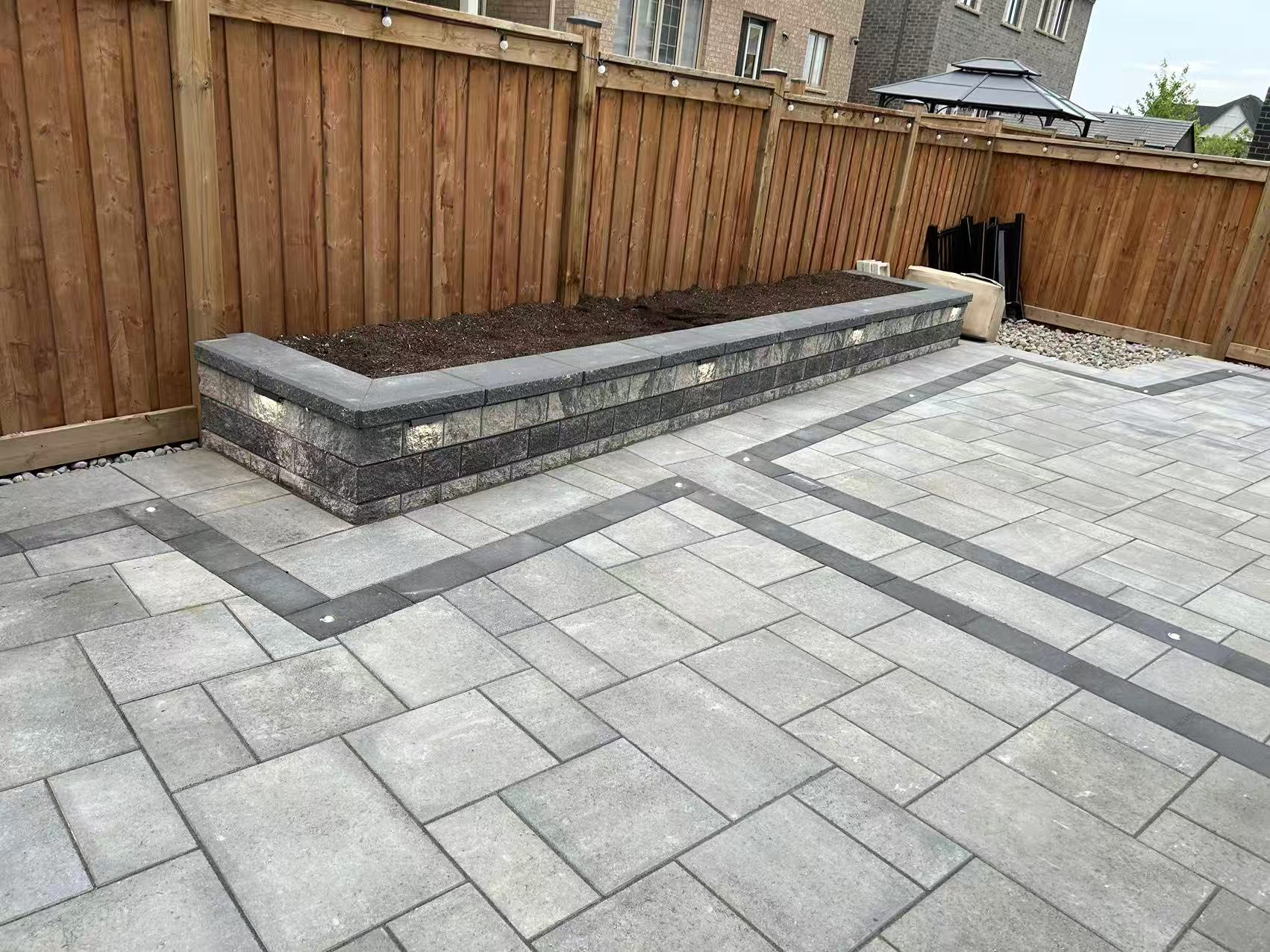
Every spring in the GTA, the same damage shows up in backyards and driveways across the city — heaved interlock, cracked deck boards, leaning fence posts, and a season's worth of dirt and organic growth on every outdoor surface. Most of it is predictable, and most of it can be caught early before it becomes an expensive repair.
Here's a practical spring checklist for GTA homeowners covering your interlock, deck, and fence — what to look for, what to do yourself, and what to call someone about.
Interlocking: Driveways, Patios & Walkways
Check for heaving and settling
Walk the entire surface slowly and feel for unevenness underfoot. A rocking paver — one that tips when you step on it — has lost its bedding sand support and needs to be re-set before it becomes a trip hazard or causes surrounding pavers to shift further. Low spots that hold water after rain indicate base settling and will worsen with each freeze-thaw cycle if left.
Inspect the joints
Get close to the surface and look at the joint sand. If you can see gaps — empty joints where sand has washed out or eroded — those joints need to be refreshed with polymeric sand before the growing season starts. Empty joints allow weeds to take root and water to channel directly into the base layer. Once weeds are established, removal is more involved.
Check the border pavers
The perimeter of any interlock installation takes the most stress from frost movement. Look for border pavers that have migrated outward, leaving a visible gap at the edge, or pavers that have tipped inward. This is an early sign that edge restraints may have failed or were never properly installed.
Pressure wash — but wait until the right time
Interlock should be pressure washed annually to remove algae, efflorescence, and organic debris. In the GTA, wait until consistent daytime temperatures above 10°C — usually mid-April to May — before pressure washing. Washing too early when nights are still freezing can drive moisture into the base and cause frost damage.
Efflorescence — the white powdery deposits that appear on pavers in spring — is mineral salts being drawn out of the concrete by moisture movement. It's normal, especially on newer interlock, and washes off with a light pressure wash and an efflorescence cleaner. It doesn't indicate a structural problem unless it's severe or reappearing rapidly after cleaning.
Deck: Boards, Frame & Railing
Walk every board
Do a slow walkthrough of the entire deck surface, applying weight to every board. Listen and feel for: soft spots (indicating rot beneath), excessive flex or bounce (indicating compromised joists), boards that rock (indicating fastener failure), and any visible splits or cracks wider than a quarter inch running along the grain.
Inspect the ledger and house connection
Look at where the deck attaches to your house. The ledger board should be flush against the house with no visible gap, no dark staining (indicating moisture infiltration), and no visible rot. Check that flashing above the ledger is intact — it directs water away from the connection point. A compromised ledger is the most serious deck safety issue and should be addressed immediately.
Check the posts and footings
Push on the posts and look for movement. Any wobble at grade indicates either footing failure or post rot. Probe the base of each post with an awl — the wood should feel hard and resist penetration. Soft wood at the post base means rot has started and the post needs to be assessed and likely replaced.
Test the railing
Push firmly on the railing at several points. Building code requires deck railings to resist a specific lateral load — if yours moves or wobbles significantly, the balusters or post connections have loosened and need to be tightened or replaced. Loose railings are a safety issue.
Plan your staining schedule
If your deck was last stained more than 3 years ago, spring is the right time to assess whether it needs another coat. The test: sprinkle water on the surface. If it beads up, the existing stain is still protecting the wood. If it soaks in immediately, the wood is unprotected and staining should happen before summer sun and rain accelerate further weathering. New pressure-treated lumber should wait 60–90 days after installation before staining.
Fence: Posts, Boards & Gate
Check every post for movement
Push each post firmly from the top. A well-set post in concrete should not move at all. Any visible rocking or movement means the post has heaved, the concrete base has cracked, or the post is rotting at grade. A leaning fence that isn't addressed gets progressively worse — the weight of the fence panels accelerates the lean with each year.
Look at the bottom boards
The lowest boards of a fence are the first to rot — they're closest to soil moisture, splash-back from rain, and snow accumulation in winter. Look for discolouration, softness, or boards that have separated from the fence frame. If your fence doesn't have a kickboard (a horizontal board protecting the vertical boards at the base), consider adding one during this season's repairs.
Check the gate hardware
Open and close every gate. Hinges that require lifting the gate to latch it have sagged — the gate frame needs a diagonal brace or the hinges need replacement. Latches that no longer engage are a security issue. Gate hardware is inexpensive; a gate that doesn't close properly is a bigger problem than people realize.
Assess the stain
Cedar fences should be stained every 3–5 years depending on sun exposure and weather. An unstained cedar fence greys quickly and begins to dry out, crack, and deteriorate within 5–7 years. If your fence is grey and rough, a pressure wash followed by penetrating stain will restore its appearance and extend its life significantly.
The Right Order of Operations
- Structural assessment first — fix any posts, framing, or footing issues before doing any cosmetic work
- Pressure wash everything once temperatures are reliably above 10°C
- Allow surfaces to dry fully (minimum 48–72 hours of dry weather)
- Repair or replace damaged boards, pavers, or hardware
- Re-sand interlock joints with polymeric sand
- Stain deck and fence surfaces
Spring Outdoor Services
Across the GTA
Interlock restoration, pressure washing, deck staining, and fence repairs across Toronto, Vaughan, Mississauga, Brampton, Richmond Hill and the GTA. Free on-site quotes — book early, spring fills up fast.
Request a Free Quote ↗ Call (416) 709-0909